Top offers for cheap holidays
Enjoy access to special prices, only available on package deals.
Choose from thousands of flights, hotels and stays.
Book with a small deposit and pay the rest later.
Quickly add insurance, luggage, rental cars and more.
Book the best deals on holidays to Brittany today!
Flight time: If you’re heading to Brittany from Dublin, you’re looking at a flight time of about 1 hour and 30 minutes. The main airport in the region is Rennes.
Transfer time: Once you land at Rennes Airport, the C6 bus will have you in the city centre in about 20 minutes. There’s also an SNCF train stop in Saint-Jacques de la Lande, which is just a 15-minute stroll from the airport, and you can reach the centre in a mere 5 minutes.
Price: A bus from the airport to town costs about €1.50, while the train is just €2.
Picking the best time to travel to Brittany really boils down to your preference for a lively vibe or a more peaceful experience, along with the weather of course!
April to June: Spring is a fabulous time for a holiday in Brittany. You can dodge the heavy summer crowds, and accommodations are often still available at off-peak prices. The weather tends to be mild, with temperatures ranging from 12°C to 20°C and around 6 to 8 hours of sunshine daily. Just remember, it can also get a bit rainy!
July to August: Summer is the peak tourist season, so be prepared for bustling coastal towns and busy beaches. Booking ahead is a must! Temperatures soar between 18°C and 25°C, with a lovely 8 to 10 hours of sunshine each day.
September to November: This shoulder season, particularly September and October, is one of the best times to experience Brittany. It strikes a nice balance between peace and activity. Temperatures drop from 20°C in September to around 10°C in November. You might see a bit more rain, about 50 to 70mm, and the sunshine hours fall to about 4 to 6.
December to March: Wintertime in Brittany is generally mild but quite wet. Expect temperatures between 5°C and 10°C, with only 3 to 5 hours of sunshine a day, and rainfall up to 60 to 80mm.
Spoken languages: French is the official language, but you’ll also find some locals speaking Breton. Look out for bilingual road signs in certain areas.
Local habits and customs: Brittany boasts a unique culture influenced by its Celtic roots, and life here tends to move at a more relaxed pace compared to other parts of France.
Currency: The currency in use is the Euro (€). You’ll find plenty of ATMs, and credit cards are widely accepted.
Getting around: There are dedicated TGV train routes from Paris – one goes to Brest and another to Quimper, connecting the major cities along the coasts. High-speed trains also link Lille with Rennes, all of which are complemented by local bus services. Driving is straightforward too, and you won’t have to worry about tolls on Brittany’s motorways.
Electricity and plug types: The voltage is 230V, and they use plugs with two round pins. So if you’re coming from Ireland, you’ll need an adaptor.
Time zone: Brittany is situated in the Central European Time (CET) zone, which is 1 hour ahead of GMT.
Required travel documentation: Irish travellers need a valid passport to enter France. There’s no visa required for short stays of up to 90 days.
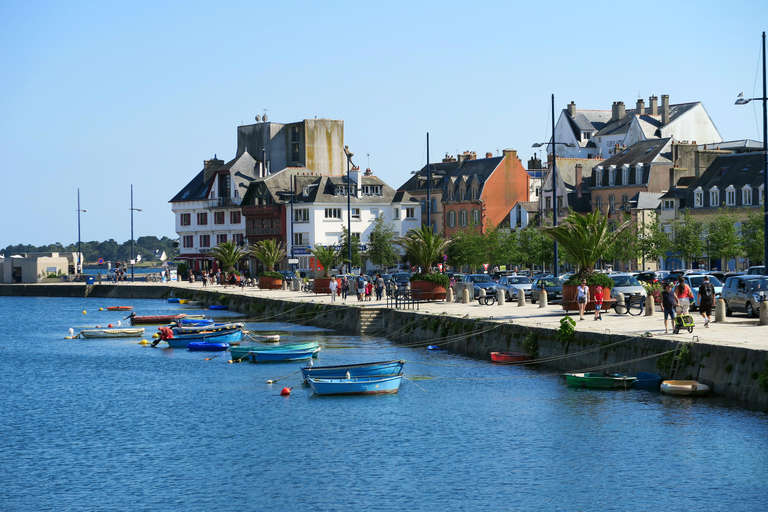
Deeply infused with Celtic culture, Brittany is renowned for its Celtic links, beautiful coastline, prehistoric sites and seafood.
Pointe du Raz: Designated a "Grand Site National", this wild landscape makes a magnificent spectacle, buffeted by wind and waves and peppered with deep gurgling fissures.
Cap Fréhel: Located in the Cotes-d'Armor department, Cap Fréhel provides stunning views over the emerald coastline and the sea, especially from its towering lighthouse.
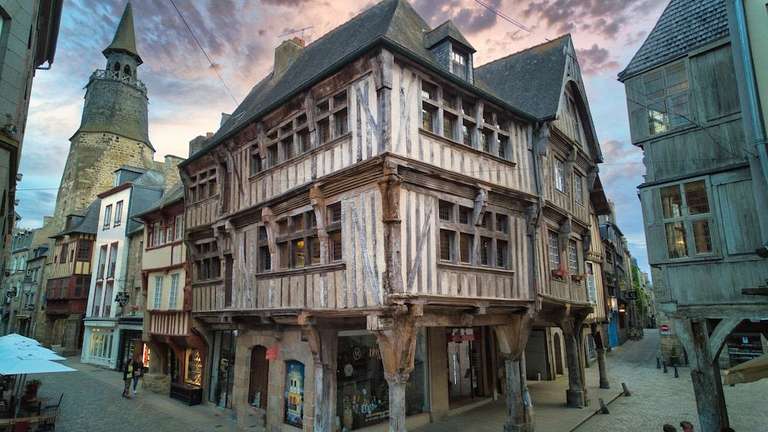
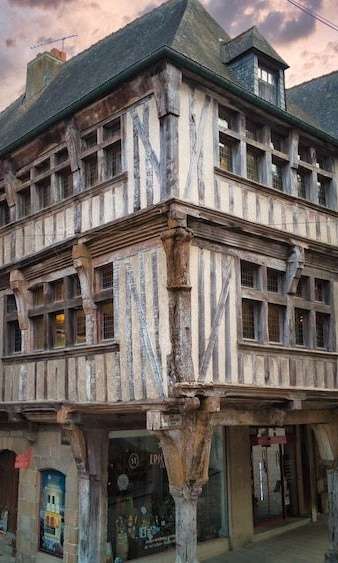
Dinan: Brittany's most complete walled medieval town, perched in a gorgeous setting above the Rance River.
Quimper: Capital of the ancient diocese, kingdom and later duchy of Cornouaille, this is the oldest city in Brittany, whose medieval quarter is among the finest in France.
Vitré: Rivalling Dinan as the best-preserved medieval town in Brittany, the towers of the castle, which dominates the western end of the ramparts, have pointed slate-grey roofs in perfect fairy-tale fashion, looking like freshly sharpened pencils.
Musée de Bretagne and Espace des Sciences, Rennes: This showpiece museum provides a high-tech overview of Breton history and culture, including the Celts, the Romans, and later still the spread of Christianity.
Musée des Beaux-Arts, Quimper: This compelling museum focuses on an amazing assemblage of drawings by Max Jacob, but look out too for the museum's solitary work by Gauguin, a goose he painted on the door of Marie Henry's inn in Pont-Aven.
Jardin des Remparts, Vannes: These abundant gardens offer a peaceful retreat with well-kept flower beds and pathways, set against the backdrop of medieval city walls.
Carnac Stones: Archeologically, Brittany is one of the richest regions in the world and the alignments at Carnac rival Stonehenge.
Cairn du Barnenez: Ancient masonry has been laid bare by excavations, and provides a stunning sense of the architectural prowess of the megalith builders. Dated to 4500 BC, this is one of the oldest large monuments in the world.
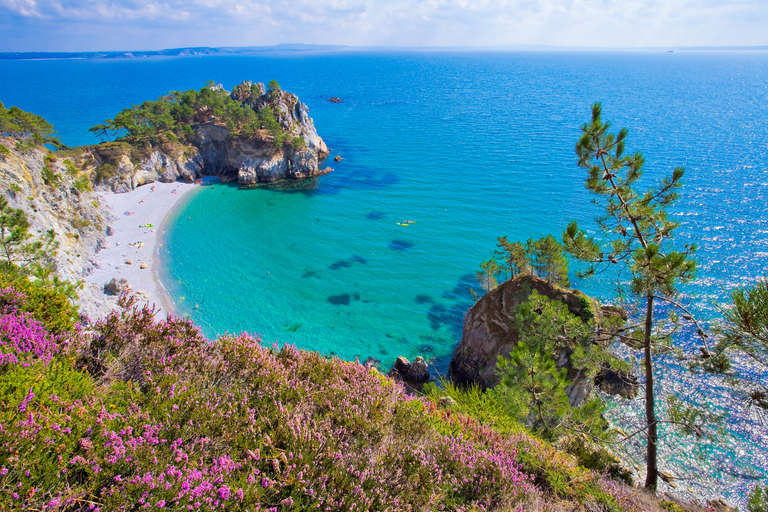
Finistère coast: With its ocean-fronting cliffs and headlands stretching all the way around the western tip of Brittany, it's hard to resist the appeal of the Finistère coast.
Belle-Île-en-Mer: The aptly named island offers a microcosm of Brittany, with wild coast in the south, beaches in the north, and beautiful countryside in between.
Golfe du Morbihan: The sheltered Golfe du Morbihan – mor bihan means "little sea" in Breton – is one of the loveliest stretches of Brittany's coast; its endlessly indented shoreline is the major attraction, with superb vistas at every turn, and countless secluded beaches.
With so much to see and do in this large region - especially around its varied coastline - you could spend weeks on your Brittany holidays and still not exhaust all the family-friendly things to do.
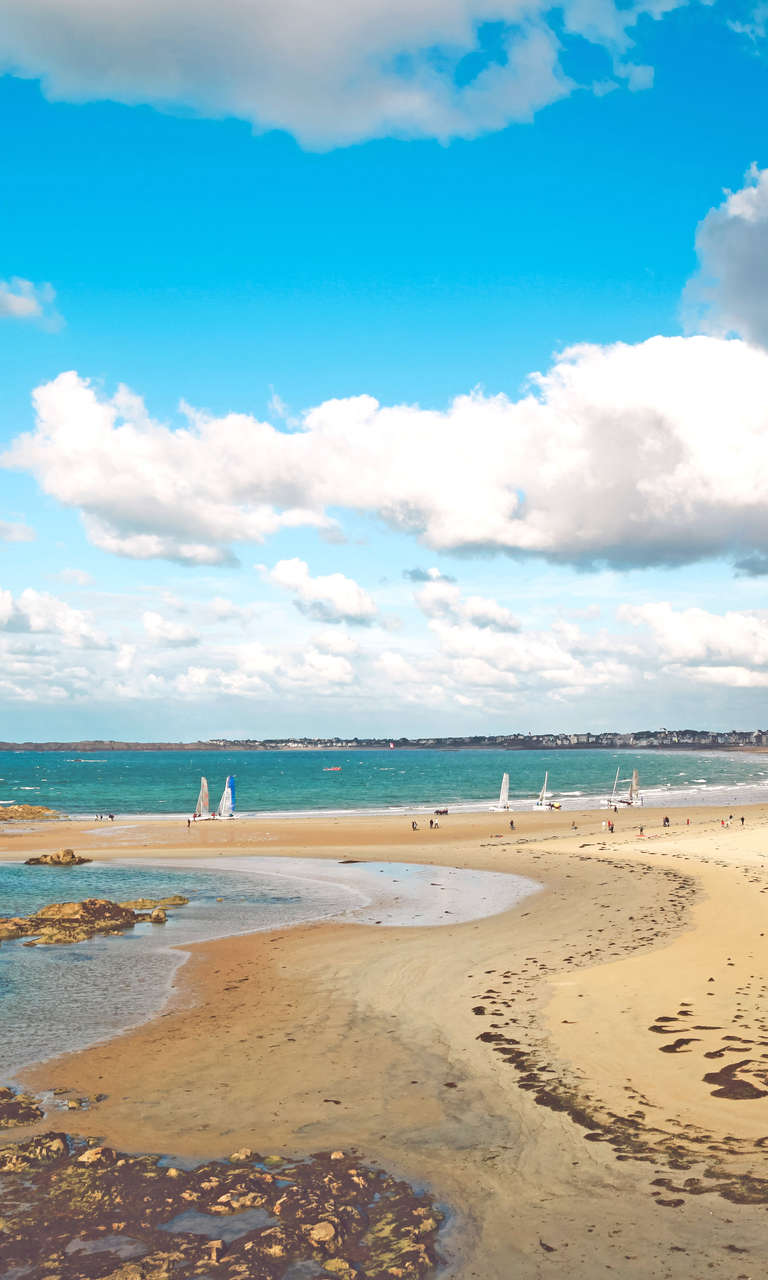
Beaches: Brittany's coastline is scattered with wonderful beaches: in particular, the Cote de Granit Rose, with its bizarre pink rock formations and gem-like beaches, is perfect for kids.
Interactive museums: Rennes' Espace des Sciences is a peculiar sort of scaly volcano that contains two floors of interactive scientific displays that change each year - and is brilliant for kids.
Aquarium and zoos: St Malo's Grand Aquarium is an entertaining place, where you can either learn interesting facts about slimy monsters of the deep or simply pull faces back at them. Océanopolis, in Brest, features a Tropical Pavilion, with a tankful of ferocious-looking sharks plus a myriad of rainbow-hued smaller fish and a Polar Pavilion, complete with penguins.
With so many opportunities for coastal adventures, festivals galore, and ancient towns and villages to roam, Brittany can be as cheap as you want it to be.
Free events: Brittany hosts numerous free cultural events and festivals throughout the year, none bigger (or with more free things to do) than the Inter-Celtic Festival which celebrates the music and culture of the Celtic nations at Lorient's summer festival.
Visit the markets: Marché des Lices in Rennes is the one to aim for but other good ones are Dinan's large, central place du Guesclin, which hosts a large market on Thursdays, and the market in Questembert's 16th-century halls, which always has a terrific atmosphere.
The region's warm white-sand beaches, towering cliffs, rock formations and offshore islands and islets mean that opportunities for outdoor recreation are plentiful and never very far away.
Hiking: The region has numerous hiking trails, king of which is the GR34, which tracks the coastline from Mont-Saint-Michel to Saint Nazairem, a distance of some 2000km! Of course you don't have to do it all, just a few sections.
Mountain Biking: Away from the coast, Brittany's mountains and moors offer superb mountain biking; the big draw is Monts d'Arrée, which has 15 marked circuits, although the Lanvaux Moors and the Crozon Peninsula are no less appealing.
Water sports: With so much incredible coastline, activities like kayaking, sailing and paddleboarding are doable just about anywhere.
Fish and seafood are the main ingredients of the Breton diet, but the food scene here has many other delicious facets.
Crepes and galettes: Brittany's proudest contribution to world cuisine has to be the crepe, and its savoury equivalent the galette; enjoy them with a variety of fillings, from ham and cheese to Nutella and bananas.
Assiette de fruits de mer: A mountainous heap of langoustines, crabs, oysters, mussels, clams, whelks and cockles, most raw and all delicious.
Cotriade: A fish stew made with a variety of fresh fish, potatoes, and onions, often flavoured with cider or white wine.
Andouillette: An intestine crammed full of more intestines, all chopped up. It's an acquired taste (and texture), but it really is better than it sounds.
Kig ha farz: A classic Breton dish, similar to a pot-au-feu, made with meat, vegetables and a buckwheat pudding.
Oysters: Brittany's oysters are renowned for their quality, best tasted from the sea in Cancale.
Soupe de poissons: A rich fish soup traditionally served with garlicky rouille mayonnaise (coloured with sweet red pepper), a mound of grated gruyère and a bowl of croutons.
Moules marinières: Giant bowls of succulent orange mussels steamed in white wine, shallots and parsley - and perhaps enriched with cream or crème fraîche to become moules a la crème.
Galettes-saucisses: Sausages wrapped in buckwheat pancakes, the best ones of which are to be found at markets.
Far Breton is considered a great delicacy, a baked concoction of sponge and custard dotted with chopped plums, while îles flottantes are soft meringue icebergs adrift in a sea of crème anglaise, a light egg custard.
Cider: Brittany produces excellent - and copious amounts of - cider, typically of the dry variety; some to try include Cornouaille, Loic Raison and Melenig.
Chouchen: A traditional Breton mead made from fermented honey, sometimes flavoured with herbs or spices.
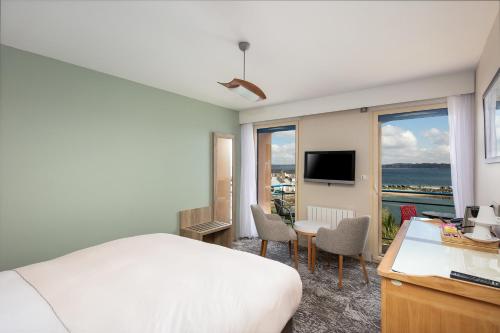
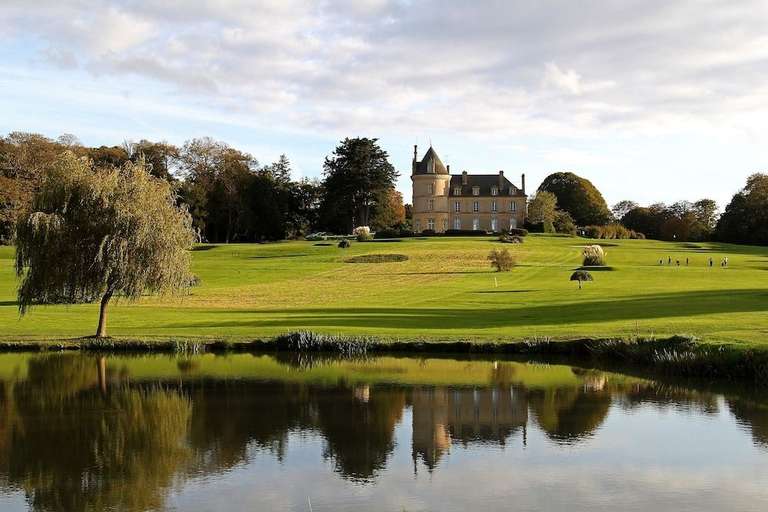
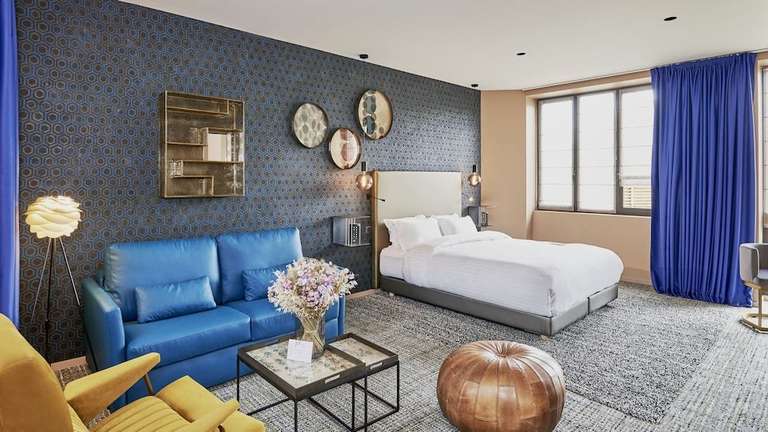
Brittany offers a range of stunning holiday spots for every type of traveller. Discover some of the best areas to stay in, like Saint Malo, Crozon, Plerin, Locquémeau, Rennes, Brest, Quimper, Lannion.
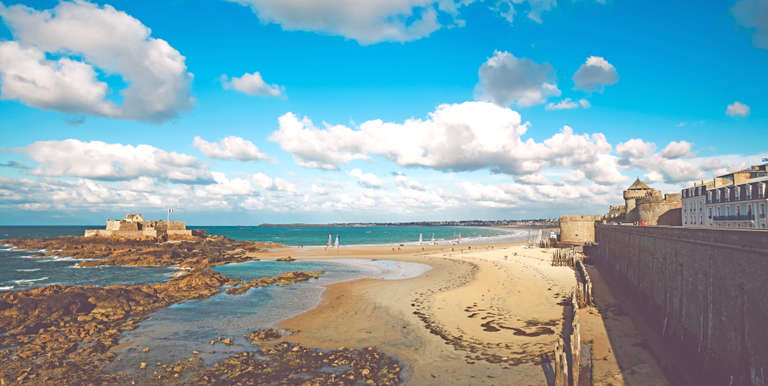
The most popular places to visit in Brittany are: Roazhon Park, Fort National, Océanopolis.
Booking a Flight + Hotel package to Brittany with lastminute.com offers several advantages. By booking both services together, you can take advantage of exclusive deals and choose from thousands of flights and accommodations for the perfect combination. Additionally, you can secure your vacation with a deposit and pay the remaining amount later. You also have the flexibility to add other travel extras such as insurance, rental cars, and luggage to the Flight + Hotel package as per your preferences.